Personal Budget 2026 is the most critical tool you need to take stock of your life, health, and financial goals this year. In an era of unpredictable global economies and fluctuating inflation, the ability to budget, plan, and save has moved from being a “good habit” to a survival necessity for every household.
Budgeting is the most effective method to monitor income and expenditure. It offers opportunities to reduce debt, live comfortably, and even improve your mental health. Based on insights from economists and financial analysts, here are five foundational tips for developing a resilient Personal Budget 2026.

1. Understand the Economic Landscape for Your Personal Budget 2026
Before diving into your own numbers, you must keep yourself aware of the realities of your country’s economic environment. Keeping an eye on external factors is critical for a successful strategy in 2026.
Key factors to watch include:
Inflation Rates: How much is the purchasing power of your money dropping?
Exchange Rates: Essential if you buy imported goods or travel.
Global Trends: International factors, such as the price of crude oil, eventually trickle down to your local grocery store.
2. Review Your Income Sources for Your Personal Budget 2026
The ability to earn income is the bedrock of any financial plan. To manage a Personal Budget 2026 effectively, you must have a clear, honest picture of what is coming in.
Ask yourself these critical questions:
What is my current net income?
Do I have the capacity to earn more or diversify?
If my income is irregular, how do I account for the “time-gap” (periods when I am not earning)?
Your answers can help you to identify gaps or untapped potential. Everyone should make allowances for uncertainties within their Strategy to ensure long-term sustainability.
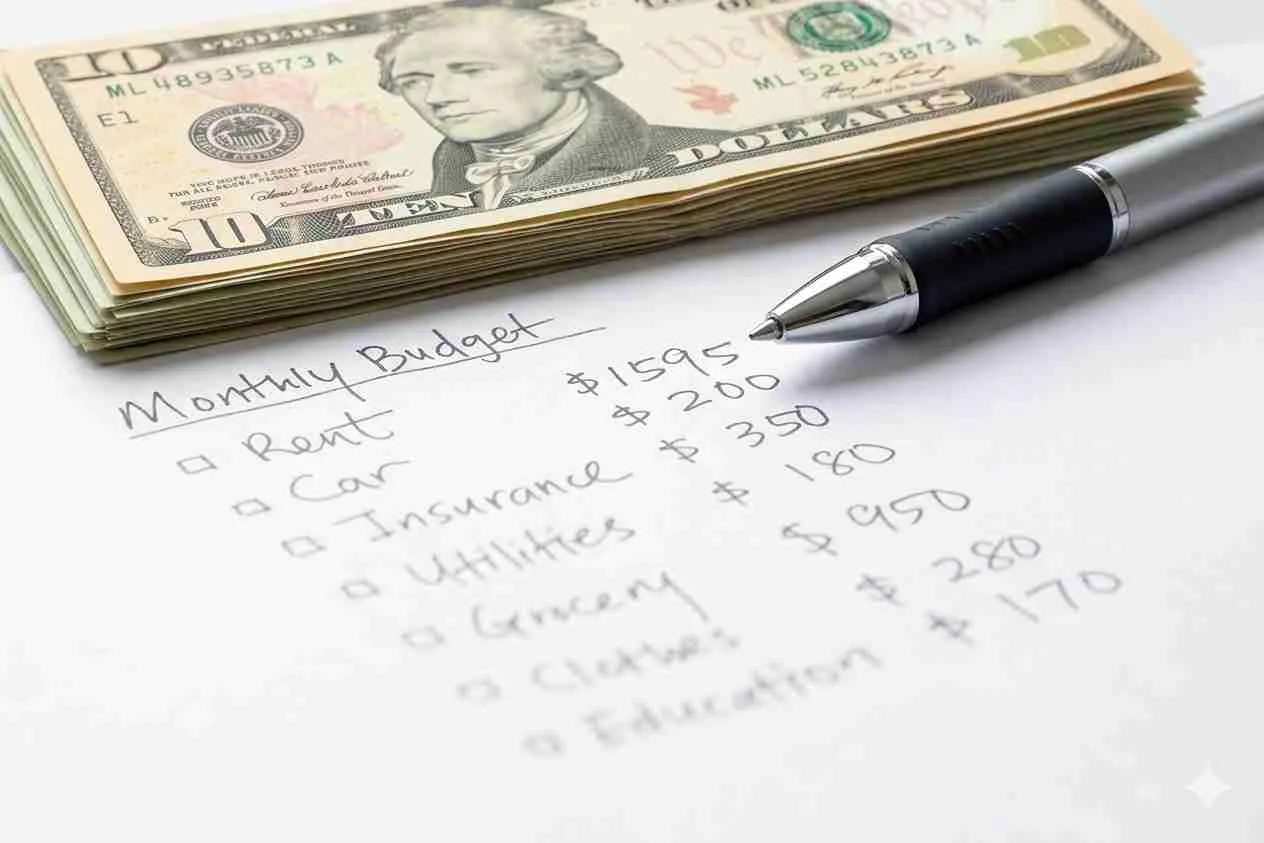
Strategic planning and income review for a successful Personal Budget 2026
3. Appraise and Categorize Expenses
To improve your spending habits, you must categorize costs into “Fixed” and “Variable.” This distinction allows for a “surgical” approach to cutting expenses when times get tough.
Fixed Expenses: These recur regularly, such as housing, transport, utilities, and food.
Variable Expenses: These are long-term or irregular, such as property investments or major purchases.
The essence of revising your spending is to analyze and refine your habits. By reviewing these, you can identify “extraordinary” costs that need modification and reallocate resources to more efficient areas of your financial plan.
4. Stabilize Your Personal Budget 2026 Through Strategic Savings
Savings act as a financial stabilizer. However, in 2026, simply “parking” money in a standard account might not be enough because inflation erodes value.
To protect your capital, consider the following:
Interest-Yielding Assets: Invest in stocks, bonds, or production where growth can outpace inflation.
Micro-savings: Daily or weekly contributions to cooperative schemes or microfinance can build significant buffers over time.
The Inflation Factor: Always adjust your savings goals to match the current economic reality.

5. Maintain a Flexible Financial Roadmap
Once created, your financial plan should not be set in stone. A truly effective strategy must be flexible enough to incorporate life’s “exigencies” and changes in your career or health.
Whether it is a sudden health emergency or a once-in-a-lifetime career advancement opportunity, your allocation of funds should be a tool that serves your life. If a promising investment opportunity arises, don’t be afraid to reallocate resources to serve the “greater good” of your financial future. Flexibility is the ultimate strength of a modern wealth management approach.
The Bottom Line
Budgeting in a tough economy is a “trial by fire.” To succeed in 2026, focus on low-cost funding, high-yield savings, and stay adaptable to the noise of the global market.
Source: Adapted from Oluwabunmi Adejumo analysis, 2026.