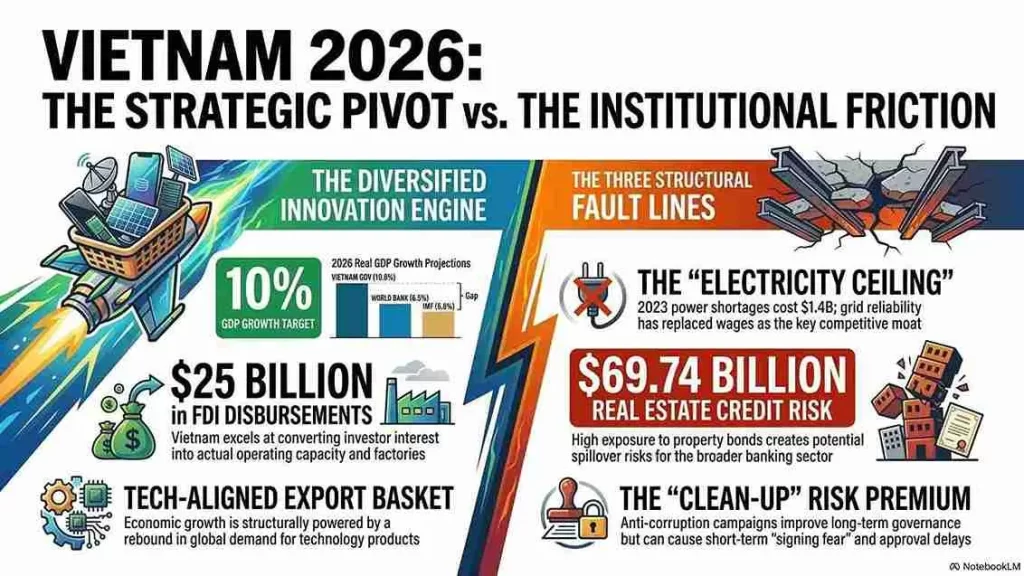
The global financial landscape is currently witnessing a dramatic shift as geopolitical tensions in the Middle East send ripples through international markets. For a highly open trade hub, the Vietnamese economy finds itself at a critical crossroads. While the nation has shown remarkable resilience, the sudden surge in fuel prices presents a significant challenge to the ambitious growth targets set for the coming years.
1. The Fuel Price Surge: A Direct Hit to Logistics
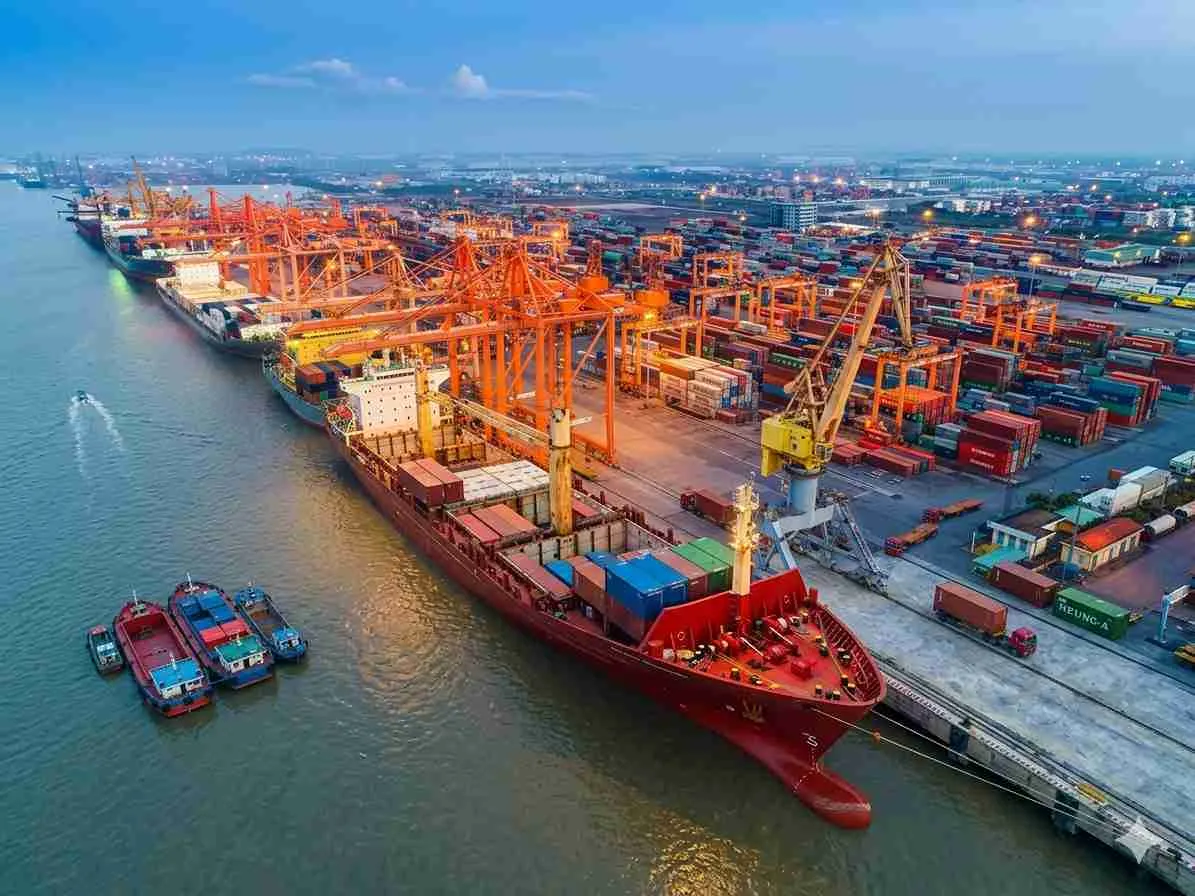
The reality on the ground is stark. Diesel—the lifeblood of transport and industrial production—has recently crossed the psychological threshold of VND 30,000 per liter ($1.20) for the first time. For the thousands of drivers operating routes like Hai Phong – Ha Noi, this isn’t just a statistic; it’s a threat to their livelihood. When fuel costs jump by more than 30%, profit margins in the transport sector virtually evaporate.
This “energy aftershock” is rooted in the volatility of the Strait of Hormuz, a global chokepoint where 20% of the world’s oil trades daily. As Brent crude climbs toward $90 per barrel, the Vietnamese economy—which imports roughly 9-10 million tonnes of refined petroleum annually—is directly exposed to these global fluctuations.
2. Macroeconomic Implications: Growth vs. Inflation
The correlation between energy costs and national performance is well-documented. Data from the General Statistics Office suggests a sobering formula: for every 10% increase in fuel prices, GDP growth can be shaved by 0.5% while inflation rises by 0.36 percentage points.
Given the current average surge of 25% across major fuels (RON95, E5, and Diesel), the Vietnamese economy could see more than a full percentage point dragged off its growth trajectory. This comes at a sensitive time as the country targets a robust 10% growth rate for 2026 and aims for a total GDP nearing the $500 billion mark.
3. Strategic Policy Responses
To ensure the Vietnamese economy stays on track for the 2026-2027 period, the government has activated an emergency energy security task force. The strategy focuses on three vital pillars:
3.1 Ensuring Supply:
Leveraging the Nghi Son and Dung Quat refineries, which currently provide 70-80% of domestic demand.
3.2 Market Monitoring:
Preventing speculation and hoarding to keep prices from spiraling out of control.
3.3 Flexible Pricing:
Authorities now have the mandate to adjust fuel prices immediately if base costs jump by 7% or more, bypassing the traditional adjustment cycles.
Furthermore, the government is considering redirecting domestic crude oil—usually destined for export—back into local refineries to stabilize the internal market.
4. The Long-Term Vision: Structural Resilience
Short-term fixes like tax reductions and reserve releases are necessary, but the long-term goal of the Vietnamese economy is to reduce vulnerability to external oil shocks. This requires a fundamental transition:
Expanding Refining Capacity: Reducing reliance on imported processed fuels.
Energy Diversification: Accelerating the shift toward electricity, biofuels, and natural gas.
Strategic Reserves: Building larger national stockpiles to buffer against geopolitical “black swan” events.
Conclusion: Vietnam’s National Resilience as a Global Benchmark
The trajectory of the country’s financial landscape as it enters the 2026-2027 period is a testament to its fundamental strength and adaptability. While global markets remain volatile due to energy crises, Vietnam’s ability to maintain its momentum is a solid affirmation of its status as a top-performing regional power in Asia. This success is underpinned by a strategic balance between managing immediate costs and fostering a robust domestic commercial environment through public investment and internal consumption.
Looking forward, the long-term health of the nation’s fiscal engine will depend on its capacity for institutional reform. By transitioning the industrial ecosystem toward more sustainable energy sources and formalizing supply chains, the government is not just chasing numbers, but is improving the very quality of its development. The shift toward a neutral fiscal stance in the medium term demonstrates a sophisticated understanding of how to protect the productive output from inflationary pressures while sustaining a competitive edge in the global supply chain.
Ultimately, the 2026-2027 period marks a critical phase where the emerging market moves beyond a low-cost manufacturing model toward a high-productivity, technology-driven future. For investors, policymakers, and citizens alike, the message is clear: the business climate is not just “back on track”—it is building a faster, more stable, and more resilient track for the decades to come.