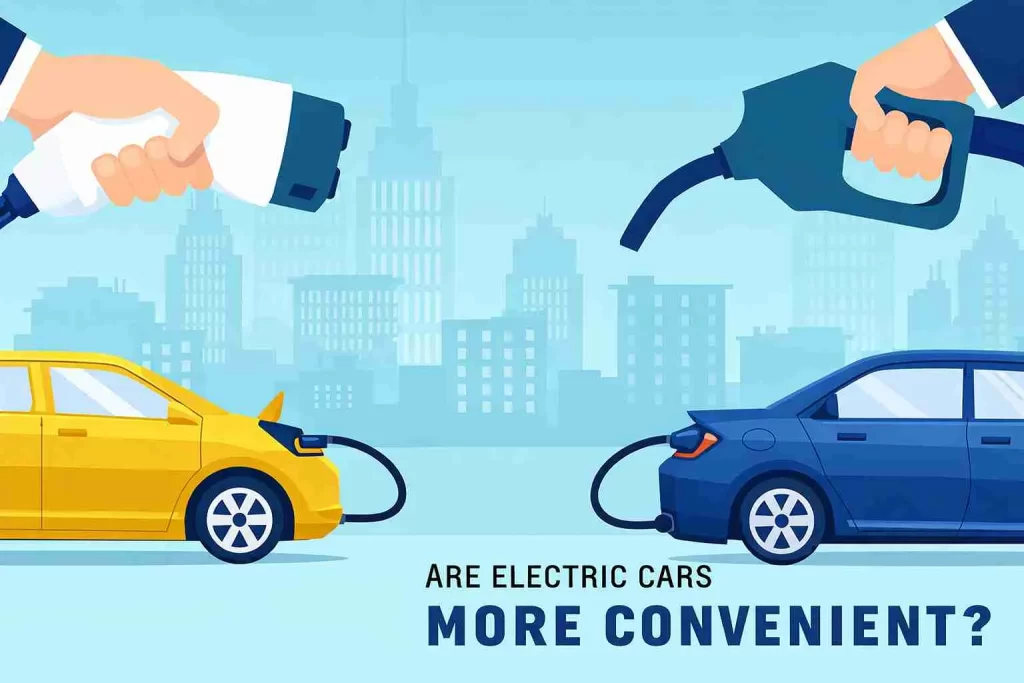
For years, the debate over Electric Vehicles (EVs) has been framed as a battle between environmental idealism and cold, hard cash. But as we move through 2025, the narrative has shifted. The question isn’t just “Are EVs green?” but rather, “Is an EV a sound financial investment?”
The honest answer is that EVs usually save money, but the Return on Investment (ROI) isn’t a jackpot you win on day one. Instead, it’s a steady stream of “quiet installments”—the gas station visits you skip and the mechanical failures that never happen.
1. The Total Cost of Ownership (TCO) Breakdown
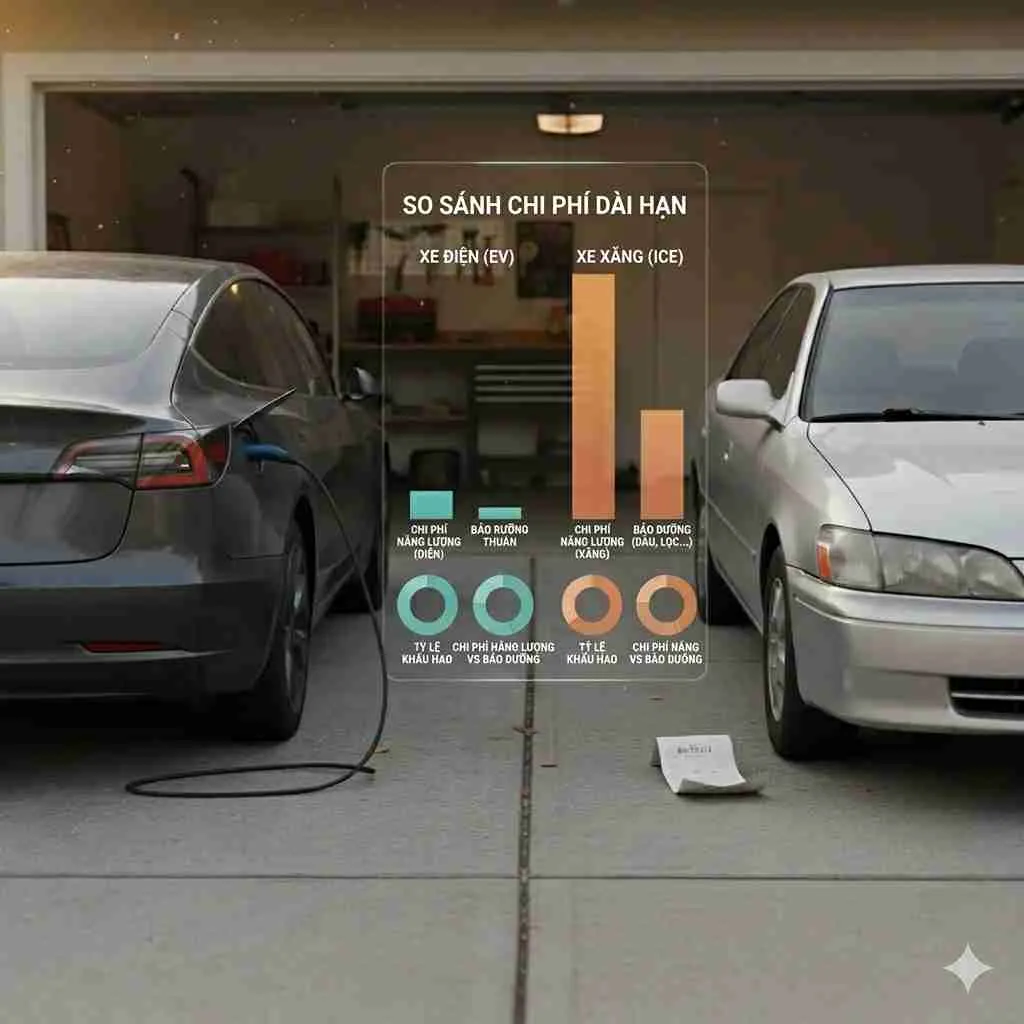
To understand if an EV saves money, you have to look beyond the sticker price. You must calculate the Total Cost of Ownership (TCO), which includes the purchase price, operational expenditures (OpEx), insurance, and depreciation.
1.1 Fuel Savings: The Home Court Advantage
The biggest driver of EV profitability is the “fuel” spread. While gasoline prices are subject to geopolitical market volatility, electricity rates are generally more stable.
Home Charging: Charging at home typically costs the equivalent of paying $1.00–$1.50 per gallon of gas.
Arbitrage: By utilizing off-peak utility rates, owners can charge their cars overnight when electricity is cheapest, maximizing their profit margin on every mile driven.
The Caveat: If you rely solely on DC fast-charging networks, your variable costs will spike, potentially equaling the cost of a fuel-efficient hybrid.
1.2 Maintenance: Slashing the Service Bill
A traditional Internal Combustion Engine (ICE) vehicle is a complex machine with thousands of moving parts. An EV is mechanically simpler.
Zero Oil Changes: This eliminates a recurring fixed cost.
Brake Longevity: Thanks to regenerative braking, brake pads and rotors can last twice as long as those on gas cars.
Lower Frequency of Repair: With no spark plugs, timing belts, or exhaust systems, the likelihood of high-cost mechanical failure drops significantly over a 5-to-10-year holding period.
1.3 Depreciation and the “Used” Sweet Spot
Historically, capital depreciation has been the Achilles’ heel of new EVs. Rapid technological leaps and shifting tax incentives caused early models to lose value quickly.
However, in 2025, this has created a “Goldilocks zone” for budget-conscious buyers: the used EV market. By purchasing a 3-year-old EV, you allow the first owner to absorb the steepest part of the depreciation curve. When you combine a lower acquisition cost with federal tax credits (which can now be applied at the point of sale), the math becomes overwhelmingly positive.
2. When the Math Doesn’t Add Up
An EV is not a guaranteed money-saver for everyone. You might face a net loss or a much longer break-even point if:
Low Annual Mileage: If you drive less than 5,000 miles a year, the fuel savings won’t offset the higher upfront capital expenditure (CapEx).
No Home Charging: Paying “retail” prices at public chargers eats into your disposable income gains.
Overbuying: Purchasing a $90,000 luxury electric SUV when a $30,000 sedan fits your needs is a lifestyle choice, not a financial strategy.
3. Mitigating the “Battery Risk”
The most significant contingent liability in EV ownership is the battery. Replacing a battery pack out-of-warranty can cost upwards of $10,000. However, 2025 data shows that modern lithium-ion batteries are over-engineered for longevity.
To protect your asset value, savvy buyers now use diagnostic tools (like the Recharged Score) to verify battery health before closing a deal. This transparency transforms the battery from a “guessing game” into a calculated risk.
The Bottom Line
Electric cars are efficient appliances designed to turn energy into mobility at the lowest possible unit cost. If you can charge at home and drive a typical 12,000+ miles per year, the compounded savings on fuel and maintenance will likely outweigh the initial price premium within 4 to 5 years.
The Strategy: Focus on the long-term fiscal outlook. Don’t just look at the monthly car payment; look at the total monthly outflow including energy and upkeep. In the 2025 economy, the quietest cars often make the loudest financial sense.